

Calories: What They Are & Why They Matter
- Ricky Killeen

- Jul 29, 2025
- 2 min read
Updated: Aug 22, 2025
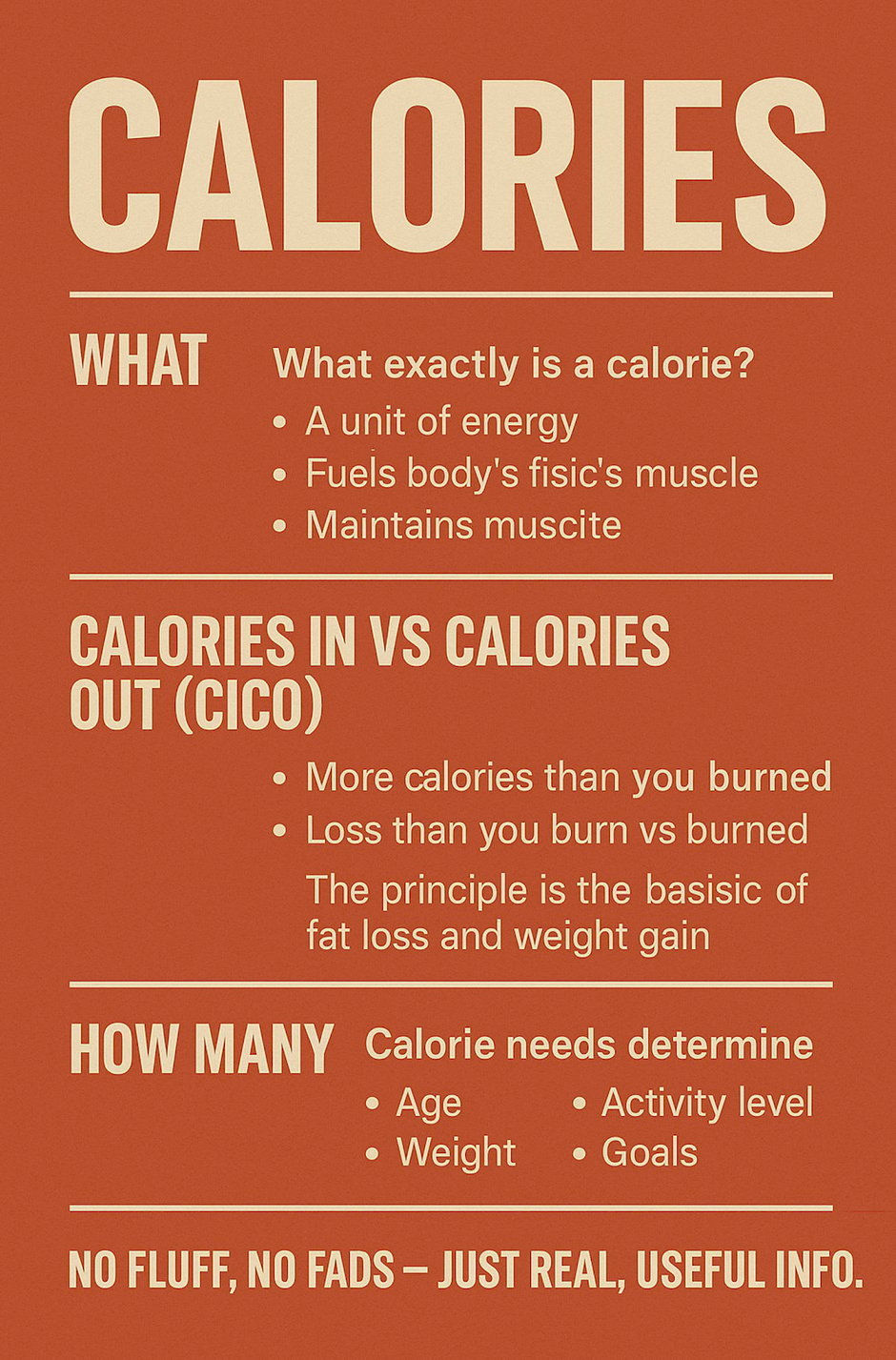
When it comes to health, fitness, and weight management, calories are a word you’ll hear constantly. But what are calories, really?
And why should you pay attention to them—regardless of your goals? Let’s break it down in plain English.
What Is a Calorie?
A calorie is simply a unit of measurement—a way of quantifying the energy you get from food and drink. In the same way we use centimetres to measure length or kilograms for weight, calories measure the potential energy in what you consume.
Technically, one calorie is the amount of energy needed to raise the temperature of one gram of water by one degree Celsius. In practice, when we talk about “calories” on food labels, we’re referring to kilocalories (kcal), which is 1,000 times larger. On packaging, “calories” and “kcal” mean the same thing.
Why Do Calories Matter?
No matter what you eat—protein, carbohydrates, fat, or even alcohol—your body converts it into energy (calories). You need a certain number of calories each day to fuel everything your body does: breathing, moving, digesting, even sleeping.
Here’s where it matters:
Calorie surplus: Eat more calories than you burn and you’ll gain weight.
Calorie deficit: Eat fewer calories than you burn and you’ll lose weight.
Calorie maintenance: Eat roughly the same amount as you burn and your weight stays stable.
This is the most fundamental law of nutrition. Whatever diet you choose—low carb, high protein, vegan, intermittent fasting—it still boils down to calories in versus calories out.
Where Do Calories Come From?
Every type of food contains a different amount of calories:
Protein: 4 calories per gram
Carbohydrate: 4 calories per gram
Fat: 9 calories per gram
Alcohol: 7 calories per gram
That’s why foods high in fat and alcohol are more “calorie dense,” meaning they pack more energy into a smaller portion.
Do You Need to Count Calories?
Not everyone needs to meticulously count calories, but being aware of your intake is incredibly useful—especially if you have a specific goal like fat loss, muscle gain, or weight maintenance. Tracking what you eat, even for a week, can be a real eye-opener and help you spot where you might be going wrong.
If you’re serious about results, a rough understanding of calories is invaluable.
Calories Aren’t the Whole Story
Calories are fundamental, but they’re not the only thing that matters. The quality of your food—nutrients, fibre, protein, vitamins—still makes a big difference to how you feel, perform, and recover.
Aim for a balanced diet rich in whole foods, lean protein, fruit, vegetables, and healthy fats. Use your calorie intake as a guide, not a restriction.
Takeaway
Calories measure the energy in your food and drink.
If you want to lose, gain, or maintain weight, understanding calories is essential.
Focus on the quality of your food as well as the quantity.
You don’t have to obsess—but having a handle on calories helps you make better decisions, whatever your goal.
Need personalised support with your nutrition or training? [Book a free discovery call with Ricky] and let’s work together towards your goals.


Comments